
Commercial Waste Covent Garden: Recycling and Sustainability
Welcome to our practical overview of sustainable waste services for the heart of London. As a dedicated partner for Commercial Waste Covent Garden clients, we prioritise an eco-friendly waste disposal area approach across offices, theatres, shops and market stalls. Our plan balances day-to-day collection efficiency with long-term strategies to develop a truly sustainable rubbish area for local businesses and venues.We set a clear recycling percentage target to drive progress: a 70% recycling and diversion rate by 2030 for all commercial waste streams originating in Covent Garden. This target is supported by measured monthly performance, route-level reporting and continuous improvements in sorting at source. Our goal is to reduce landfill dependency, increase material recovery and showcase how commercial waste in Covent Garden can be a resource rather than a burden.
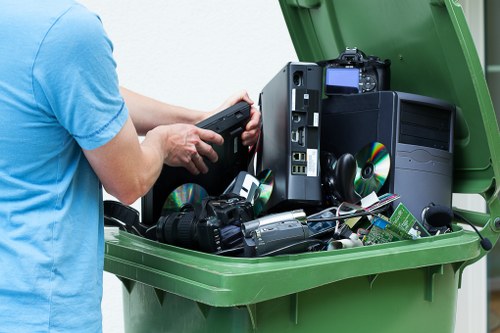 Many local boroughs influence how waste is handled in the Covent Garden area. Westminster and neighbouring Camden promote source separation schemes for glass, paper, plastics and organic food waste, and our services align with those policies. Theatres, restaurants and retailers here often produce high volumes of cardboard, food waste and textiles — we work with site teams to ensure compliant separation and efficient collections tailored to the area’s mixed-use character.
We route materials to local transfer stations and Materials Recovery Facilities (MRFs) that service central London, ensuring a low-journey, low-emission logistics chain. Key elements include:
- Consolidation at nearby municipal transfer stations and central London hubs to reduce inner-city truck miles.
- Delivery to certified MRFs that sort mixed recyclables, improving capture rates for plastics, paper and metals.
- Specialist routes to anaerobic digestion plants for food and to textile/furniture re-use centres to extend product life.
These local transfer solutions keep the footprint small and the recovery rate high: shorter distances to MRFs mean faster turnaround and a more reliable circular path for materials collected from Covent Garden commercial refuse.
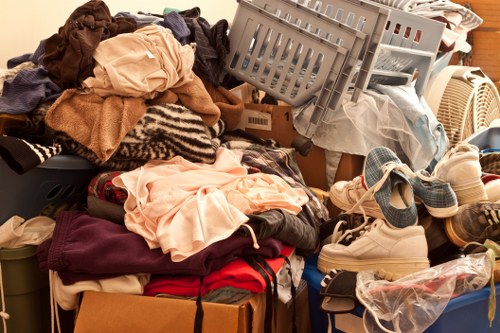 Community benefit and social value are central to our approach. We maintain active partnerships with charities and social enterprises that accept usable donations from commercial collections — everything from surplus textiles and furniture to unopened packaged items. By routing appropriate loads to charity partners and reuse networks we not only divert waste from disposal but also support local beneficiaries and reduce the need for new goods.
Our fleet strategy supports those partnerships: a fleet of low-carbon vans, including electric and hybrid vehicles, is used for collections across the area. Vehicles are equipped with telematics and optimised routing to limit idling and emissions, and all urban pickups comply with low-emission zone requirements. This is part of our commitment to being a carbon-conscious commercial waste partner in Covent Garden.
Our Sustainable Rubbish Area Standards
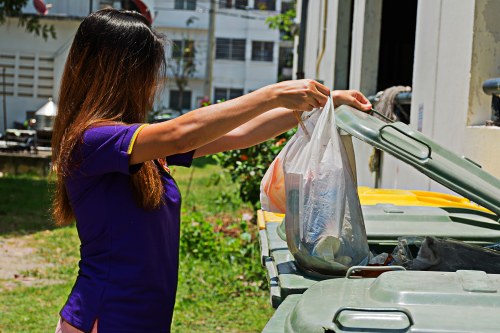
Every building and site we service receives a practical plan for creating a sustainable rubbish area: clear signage, colour-coded containers, designated food waste bins and a compact staging area to prevent contamination. We train on-site staff and waste champions to manage day-to-day separation, monitor contamination rates and apply corrective action where necessary.Low-carbon fleet & logistics
Route optimisation software reduces vehicle miles and ensures collections are consolidated. Where electric vans are not yet feasible we deploy low-emission hybrids while planning for full electrification. Charging infrastructure, regenerative braking and load optimisation all contribute to a measurable decline in transport-related carbon from our commercial waste collections in Covent Garden.Recycling activity in the area includes targeted streams for cardboard from markets, glass from bars and restaurants, food waste from hospitality venues, textiles from boutiques and WEEE collections from offices and theatres. We work with local boroughs’ guidance on acceptance criteria and frequently provide site audits to improve capture rates and compliance with council requirements.
 Engagement is ongoing: workshops for premises managers, posters and floor decals for staff, and quarterly audit visits to measure progress against the recycling percentage target. We also run seasonal campaigns to capture higher volumes of recyclable materials (e.g., cardboard after holidays) and to promote reuse options for display fixtures, props and office furniture through accredited reuse partners.
 Performance is transparent and traceable. Monthly reports show tonnage diverted, contamination levels and carbon reductions from lower-mileage routes and the low-carbon van fleet. We use digital manifests and tracking to make sure every collection from Covent Garden is accounted for and routed to the most sustainable outlet. Quarterly reviews with clients help refine services and accelerate progress toward our targets.
In summary, our approach to commercial waste in Covent Garden is built on measurable targets, local transfer and recovery pathways, charity partnerships that extend product life, and a low-carbon vehicle strategy that keeps the central London footprint small. By prioritising an eco-friendly waste disposal area and a resilient, sustainable rubbish area, we help businesses in Covent Garden meet regulatory expectations and demonstrate leadership in circular, low-carbon waste management.
