Insurance and Safety — Commercial Waste Covent Garden
 Welcome to our overview of insurance and safety standards for Commercial Waste Covent Garden. This page explains how a professional, insured rubbish company manages risk, protects clients and complies with industry regulations. We focus on the core pillars that any reputable insured waste removal company must deliver: comprehensive insurance cover, rigorous staff training, appropriate PPE, and a clear risk assessment process. These measures ensure that your commercial waste handling is handled by an insured waste company that prioritises safety and accountability.
Operating as an insured rubbish collection Covent Garden provider means more than holding a policy: it requires systems, audits and documented procedures. Our approach treats insurance as active protection rather than passive paperwork. A true insured commercial waste company will maintain up-to-date certificates, clear schedules for vehicle and equipment checks, and transparency on policy limits and endorsements. Clients should expect to see proof of cover that includes both operational and environmental exposures.
Public Liability Insurance and Cover
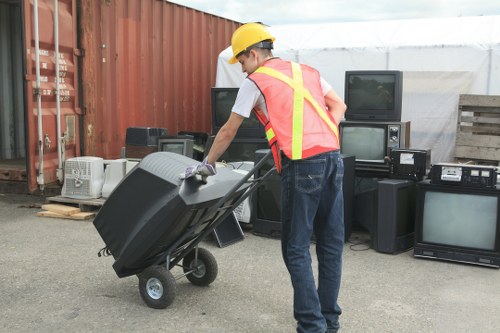 Public liability insurance is the backbone of liability protection for any insured rubbish service. This insurance covers third-party injury or property damage caused during waste collection, transportation and disposal. For commercial waste in Covent Garden, policies typically include cover for: accidental damage to neighbouring properties, slips or trips caused by waste left on site, and incidents arising during loading or unloading. An insured waste company will carry adequate limits to match the scale of operations and the value of the premises served.
Staff Training, Competency and Supervision
Well-trained staff are the difference between a claim-free service and costly incidents. Our training framework for an insured rubbish removal provider emphasises induction, ongoing competency checks and supervisor-led coaching. Every operative receives training in manual handling, safe lifting, spill response and the correct use of PPE. Supervisors perform regular toolbox talks and record assessments so the insured commercial rubbish company can demonstrate consistent competence across shifts.
 Staff training for an insured waste removal company also covers regulatory obligations such as waste duty of care, segregation requirements and documentation for hazardous or controlled waste. Training records are retained and audited; refresher sessions are scheduled annually or when operational changes occur. This ensures operatives are prepared for the specific hazards of busy urban environments like Covent Garden, where pedestrian traffic and limited access increase operational risk.
Poorly trained staff increase the likelihood of incidents — and therefore claims. A robust training regime lowers claims frequency and supports an insured rubbish company in negotiating favourable insurance terms.
Personal Protective Equipment is a fundamental control layer in the safety hierarchy. Appropriate PPE reduces injury severity and supports compliance with health and safety law. As an insured waste company, we require operatives to use protective items matched to each task and environment, including high-visibility clothing, cut-resistant gloves and suitable footwear.
 PPE provision for an insured waste removal company goes hand-in-hand with maintenance and inspection. Equipment is logged, replaced as required, and supervisors check fit and condition before work. Common PPE items used across commercial waste operations include:
- High-visibility jackets and trousers to improve visibility on busy streets
- Cut-resistant and chemical-resistant gloves depending on material handled
- Steel-toe boots to protect against crushing injuries
- Eye and face protection for tasks that risk splashes or airborne particles
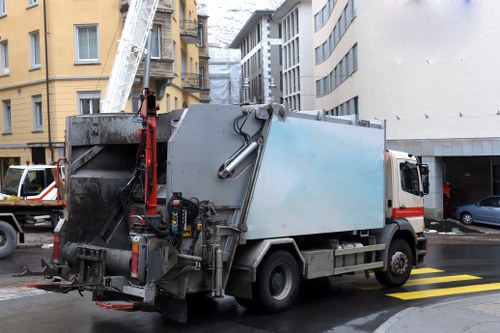 Risk management is strengthened when PPE, training and insurance work together. An insured commercial waste company will set mandatory PPE standards, enforce compliance and keep records to demonstrate due diligence in the event of an incident.
Risk assessment is a living process: it begins before collection, continues during operations and is reviewed after completion. The risk assessment process for an insured rubbish company typically follows four stages: identify hazards, evaluate the risk, implement controls and monitor effectiveness. Written assessments are prepared for each site type — retail premises, restaurants, offices and construction sites — reflecting the unique hazards associated with each.
For an insured commercial waste company, risk assessments include route planning to avoid congestion, vehicle and pedestrian interface control, segregation procedures for hazardous wastes, and contingency plans for spills or unplanned obstructions. Assessments are version-controlled and signed off by trained supervisors to ensure accountability.
Finally, claim response and ongoing improvement are essential. When an incident occurs, an insured rubbish service should have an incident reporting system, immediate containment procedures and liaison protocols with insurers. Post-incident reviews feed back into training, PPE guidance and risk assessments so that the organisation continually reduces exposure and demonstrates an ongoing commitment to safe, insured commercial waste collection in Covent Garden.
